

What Pilgrimage Really Means in the Bible (And Why It Still Matters Today)
Why would anyone travel halfway around the world to meet with God when God is already right there with them?
It is a fair question. I have had people ask me some version of it for years, between mission trips and the Bible study live trips we lead now. And the honest answer starts with a word most of us think we understand but really do not. Pilgrimage.
Want to hear the full teaching on this? Listen to the episode here: Hearing Jesus on Apple Podcasts.
What does pilgrimage mean in the Bible?
When you hear that word, you might picture the Pilgrims who came to America, or a vacation with a religious theme, or a tour bus full of Christians. That is part of it, but it is not the heart of it. In scripture, pilgrimage is a journey you take on purpose, and the purpose is meeting with God. The destination matters, but the going matters too. You are not just trying to get somewhere. You are letting the journey itself do something in you. That is what makes it a spiritual practice and not just a trip.
And here is what surprises people. Pilgrimage is woven all through your Bible, probably a lot more than you realize.
Where does pilgrimage start in scripture?
The whole life of faith begins with it. Everything we know about Abraham starts with one word from God. The Lord had said to Abram, "Go from your country, your people and your father's household to the land I will show you. I will make you into a great nation, and I will bless you" (Genesis 12:1-2). God's first invitation was not stay where you are and I will bless you there. It was go. There were not even directions. Just go to the land I will show you. The journey was the beginning of the relationship, because faith meant trusting God enough to take the first step toward whatever He had ahead.
By the time we get to the law, pilgrimage stops being something the patriarchs simply did and becomes something God commanded. He gave Israel a rhythm for their year and built this practice right into the center of it. Three times a year all your men must appear before the Lord your God at the place he will choose (Deuteronomy 16:16). Three times a year, every man in Israel traveled to the place God chose, which became Jerusalem. In Hebrew these were called the Shalosh Regalim, the three pilgrimage festivals. I love that the word for pilgrimage there is connected to the Hebrew word for foot, because you went on foot. You traveled. With your body, with your family, over many days.
Why did God command pilgrimage three times a year?
Each feast remembered something God had done. Passover remembered the Exodus, when God brought them out of slavery. The Feast of Weeks celebrated the first of the harvest and the giving of the law at Sinai. The Feast of Tabernacles remembered the forty years they lived in tents in the wilderness, when God provided for them day after day. During that feast they would actually build little shelters and live in them for a week, just to remember what it felt like to depend on God for everything.
Do you see what God was doing? He knew the human heart drifts. He knew that in the middle of ordinary life we forget. So three times a year He said stop, travel, come and remember together what I have done.
What are the Songs of Ascent?
Here is the part a lot of people have never noticed, even reading their own Bibles. We still have the songs they sang on the way. Psalms 120 through 134 each carry a little heading at the top in most English versions. A song of ascents. There are fifteen of them in a row, and they are the songs the pilgrims sang as they climbed up to Jerusalem. They are called songs of ascent for a simple reason. Jerusalem sits up in the hills, so no matter which direction you came from, you were always going up.
If you read those fifteen psalms in order, something remarkable happens. They trace the emotional journey of the pilgrim. The first one begins in a hard place. I call on the Lord in my distress, and he answers me (Psalm 120:1). The pilgrim starts in trouble, far from home, often surrounded by people who do not know God. Then the songs begin to climb. I lift up my eyes to the mountains. Where does my help come from? My help comes from the Lord, the Maker of heaven and earth (Psalm 121:1-2). And by Psalm 122 the road breaks open into joy. I rejoiced with those who said to me, "Let us go to the house of the Lord" (Psalm 122:1). The collection keeps climbing until the pilgrims have arrived, standing in the house of the Lord, lifting their hands, being blessed. The journey that started in distress ends in worship, and the going was part of how they got there.
What does it mean to have your heart set on pilgrimage?
There is one psalm I keep coming back to, because it tells us that pilgrimage is not really an event at all. It is a posture of the heart. How lovely is your dwelling place, Lord Almighty! My soul yearns, even faints, for the courts of the Lord (Psalm 84:1-2). And then the verse that holds the whole thing together. Blessed are those whose strength is in you, whose hearts are set on pilgrimage (Psalm 84:5). Read that slowly. God does not only call blessed the people who have arrived. He calls blessed the people who are still on the way, the ones who decided in their hearts that seeking Him was worth the journey.
The very next verse tells us what that journey is actually like. As they pass through the Valley of Baca, they make it a place of springs (Psalm 84:6). Baca means weeping. It was a dry, hard valley the pilgrims had to walk through to reach Jerusalem. Catch what the psalm is saying. The pilgrim does not go around the hard valley. The pilgrim walks straight through it, and because their heart is set on God, the dry place becomes a place of water. The hardest stretch of the road becomes where they find life. They go from strength to strength.
That is what a spiritual practice does in us. Life is hard, really hard. The disciplines do not remove the hard. They transform what the hard valley produces. And setting your heart to seek God on purpose is one of the practices that does exactly that.
Was Jesus a pilgrim?
This was never only an Old Testament thing. Jesus himself was a pilgrim. Every year Jesus' parents went to Jerusalem for the Festival of the Passover. When he was twelve years old, they went up to the festival, according to the custom (Luke 2:41-42). That is the trip where He stayed behind in the temple. He grew up walking that road and very likely sang those same songs of ascent with His family year after year. When we choose to make a pilgrimage, we are walking in something Jesus did with His own two feet.
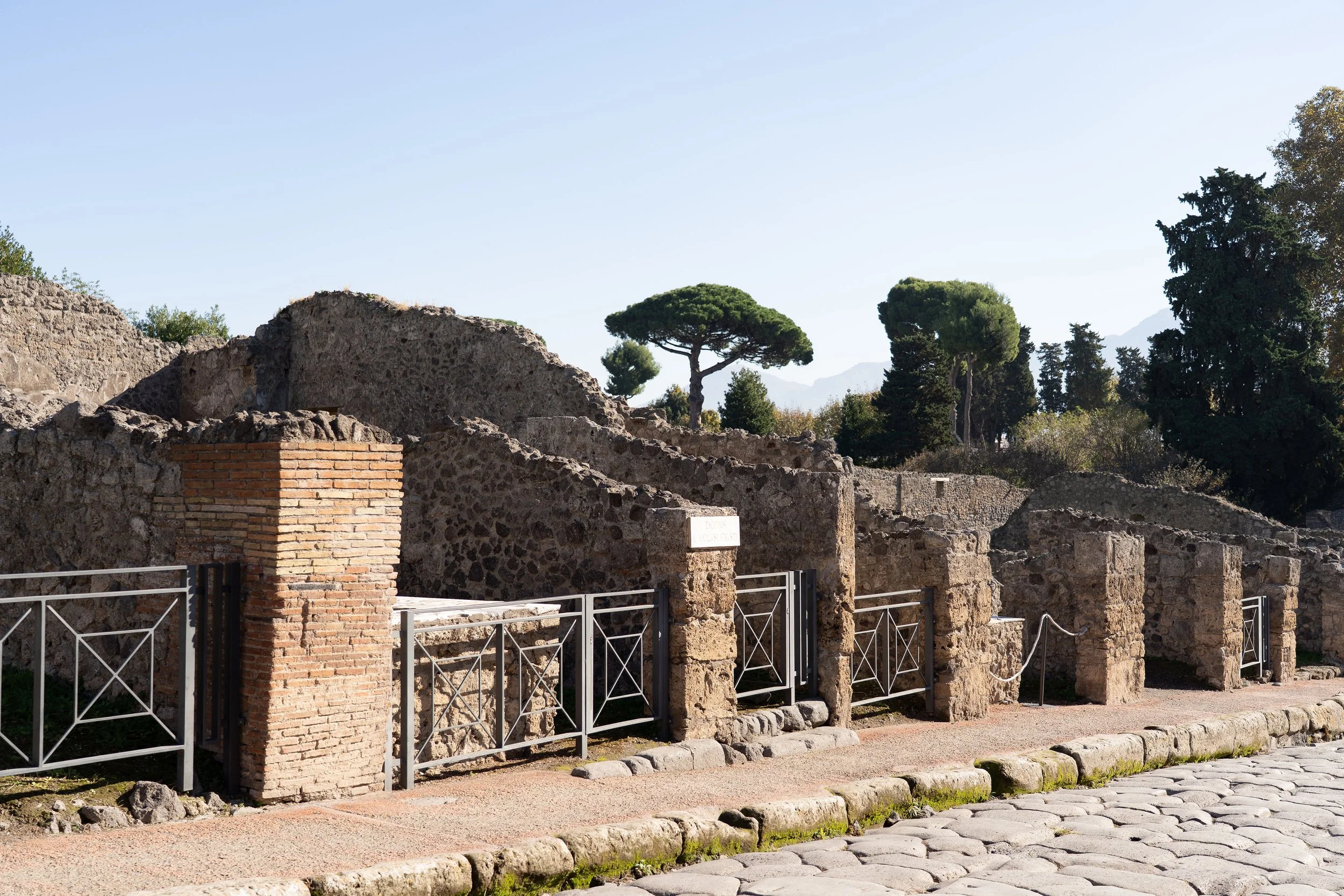
The early church carried it forward. Believers began traveling to the places where the great events of their faith had happened. They wanted to stand where the apostles stood, to be where the church was born, to walk the ground where the gospel spread under real pressure. So they went to places like Rome, where Paul and Peter gave their lives and the church somehow grew through terrible persecution. Not because those streets hold power, but because something happens in the human heart when you put your feet in the place where the story actually unfolded.
If God is everywhere, why go on a pilgrimage at all?
Now I want to be careful here, because I know what some of you are thinking. God is everywhere. You do not need to go to Rome to find Him. You are right, and the New Testament makes that clear. We are no longer required to travel to a temple, because in Christ the presence of God now lives in us. You can meet Him at your kitchen table, in your car, in the carpool line, in the hospital waiting room, in the middle of a sleepless night. That ground is holy too, because you carry the Lord with you.
So pilgrimage is not about earning God's presence or going somewhere He is more available. It is about stepping into a practice He has used for thousands of years to draw His people closer. The same reason we still kneel when we could pray standing. The same reason we still fast even though God is no less near to us after lunch. The same reason we gather in person when we could stay home and stream the service. We are not only souls. We are bodies. And what we do with our bodies shapes what happens in our hearts. When you set aside the ordinary and say, Lord, for this stretch of time I am seeking nothing but You, something opens up in you that the daily rhythm just does not reach.
How do you set your own heart on pilgrimage?
So let me ask you the question I keep asking myself. Where is your heart with this? Not whether you can travel somewhere. I mean the deeper thing. Have you set your heart to seek God on purpose, or are you mostly hoping to bump into Him in the margins of a busy life? There is no shame in the honest answer. But what would shift if you set your heart on pilgrimage?
And what is your valley of Baca right now? Where is the dry, hard stretch you are walking through? What would it look like to walk through it as a pilgrim, your heart set on God, trusting Him to turn even that place into springs? He can do it. I have seen it, and I have lived it.
Father, thank You that from the very beginning You have been a God who invites Your people to come and seek You. Thank You that You called Abraham to go, that You gave Your people feasts and songs for the journey, and that Your own Son walked the road of pilgrimage. I pray for the person reading this right now. Stir in them a heart that is set on seeking You. Meet them in whatever valley they are walking through, and turn it into a place of springs. And if You are calling them to seek You in a deeper way, give them the courage to say yes. We love You. In Jesus' name, amen.
If something in you leaned in while you were reading this, I would love for you to come with us. This November we are leading a Bible study live trip to Rome, walking the same roads where Paul and Peter gave their lives. We have just a few spots left, and the doors close at the end of July. You can find everything at BibleStudyLive.org, and I would love for one of those spots to be yours.
You can also listen to the full episode on pilgrimage right here: Hearing Jesus on Apple Podcasts.
Common Questions About Pilgrimage in the Bible
What does pilgrimage mean in the Bible? In scripture, pilgrimage is a journey taken on purpose with the goal of meeting God. It is different from tourism. The Hebrew word is connected to the word for foot, because it was a physical journey made with the body, traveling over days to seek God on purpose.
What are the Songs of Ascent? The Songs of Ascent are Psalms 120 through 134. They are the songs Israelite pilgrims sang as they traveled up to Jerusalem for the pilgrimage feasts. Read in order, they trace the emotional journey of a pilgrim, moving from distress in Psalm 120 toward joy and worship as they arrive.
Why did God command pilgrimage in the Old Testament? In Deuteronomy 16:16, God commanded Israel to appear before Him three times a year at the feasts of Passover, Weeks, and Tabernacles. Each feast remembered something God had done. The rhythm was built into the calendar because the human heart tends to drift and forget.
What is the Valley of Baca in Psalm 84? Baca means weeping. It was a dry, hard valley pilgrims had to cross on the road to Jerusalem. Psalm 84 says that people whose hearts are set on pilgrimage walk through that valley and it becomes a place of springs, meaning God transforms the hard parts of the journey instead of removing them.
Was Jesus a pilgrim? Yes. Luke 2:41-42 says Jesus' family traveled to Jerusalem every year for Passover. He grew up walking the pilgrimage road and very likely sang the Songs of Ascent with His family.
If God is everywhere, why go on a physical pilgrimage? Pilgrimage is not about earning God's presence or finding a place where He is more present. It is a spiritual practice, like kneeling to pray or fasting. What we do with our bodies shapes what happens in our hearts, and setting aside comfort to seek God on purpose makes room that daily life rarely reaches.
