

What Do Numbers Mean in the Bible?
Twelve marks God's people. Forty shows up in seasons of testing. Numbers in Scripture are precision, not coincidence. But somewhere along the way some people took that too far, and started hunting for codes. Here's the guardrail, and what the numbers in John 6 actually reveal when you line them up.
John 6:1-15
What Do Numbers Mean in the Bible?
They mean something. That's the honest answer, and it's also where a lot of people get into trouble.
Numbers show up all through Scripture on purpose. Twelve marks God's people, so you get twelve tribes and twelve apostles. Forty shows up again and again in seasons of testing. Seven carries the idea of completion. That isn't coincidence. It's precision, and it tells you something about a God who cares about details.
But somewhere along the way, some people took that too far.
There's a practice called gematria, which is a Jewish system of assigning number values to Hebrew letters. Every Hebrew word carries a numeric value just by being spelled. And people started hunting for hidden codes buried in those values, convinced that if they cracked the right pattern they'd unlock a message God had tucked away for the sharp-eyed.
I learned about gematria in seminary. I also learned about sin and witchcraft in seminary. Something existing in a time period doesn't make it biblical.
Here's my caution, and I'm going to be direct about it. First, we aren't reading Hebrew, so applying that logic to English doesn't hold together. Second, this isn't something God instructed anyone to do. It's something people developed. And we follow God, not the practices of the people around Him.
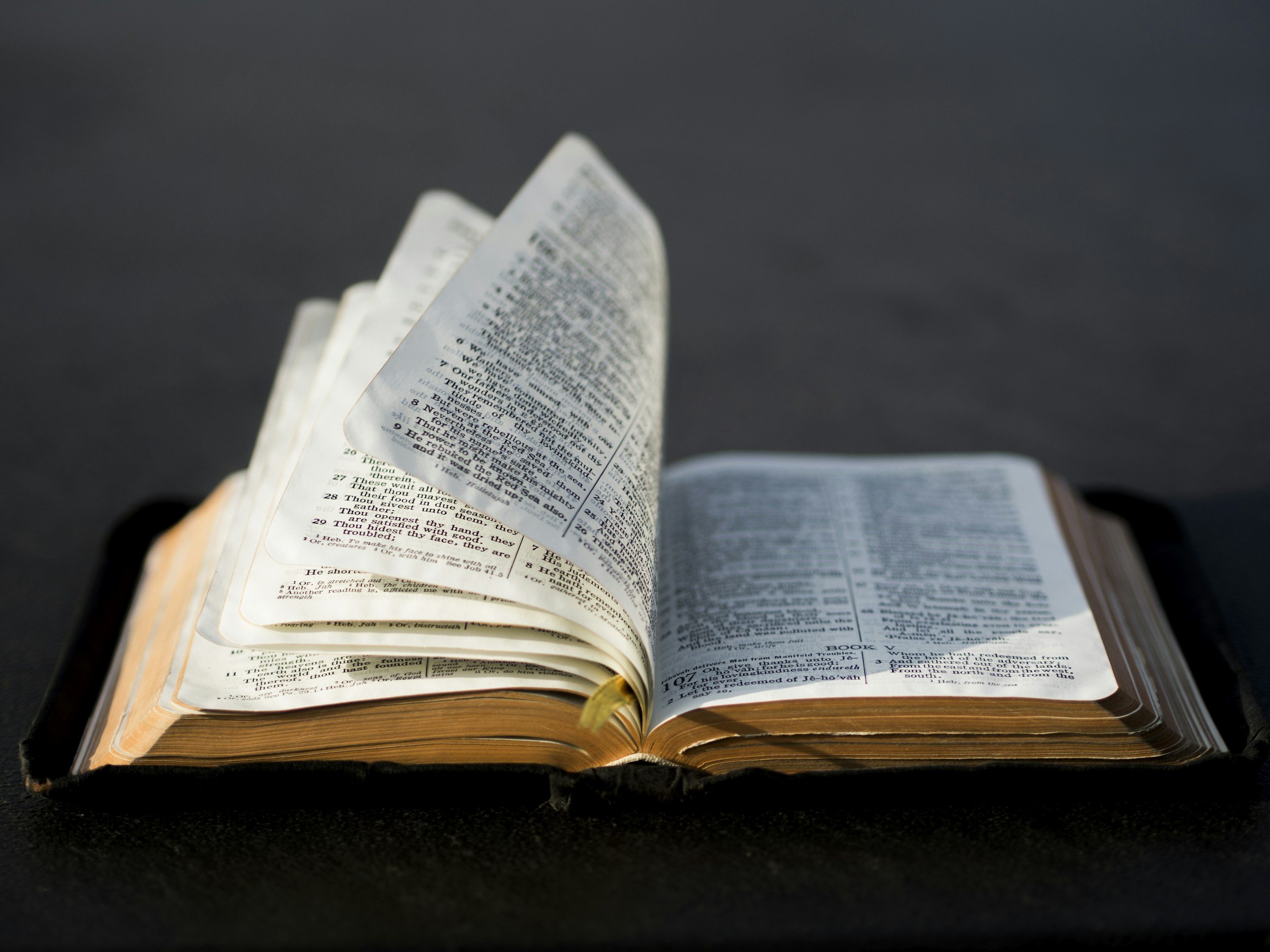
The same thing happens with 11:11. I've known people who treat that number as a personal signal, then go looking up every 11:11 address in Scripture as though it were a mandate. But those chapter and verse numbers were added centuries later by scribes and scholars so people could find things. My kids in children's ministry used to call them the addresses, which is exactly right. They're a filing system. A verse number carries no more divine weight than the picture printed on the cover of your Bible. Can God use anything? Of course He can. That doesn't make it a message.
And notice where the code-cracking always ends up. Somebody adds and subtracts their way to a date and announces the world is ending. Then the date passes. Which tells you they weren't reading the actual Bible, because Jesus said nobody except the Father knows when that happens.
Scripture was not written as a puzzle. It was written to be understood. The plain meaning of the text, what the words say in their context, carries far more weight than anything you can calculate. God's heart is that you would understand what He said.
So here's the guardrail I'd give you. Mark the number. See what it helps you understand. Ask whether the writer seems to be pointing at something. And then stop, unless the text itself makes the connection for you.
Now let me show you what that actually looks like, because we've been working through John 6:1-15 all week, and this passage is loaded with numbers.
Line them up in the order they appear.
You start with a great crowd. That's vague, and John says it twice. Then Philip converts the crowd into money. Half a year's wages, which some translations render as 200 denarii. A denarius was roughly a day's pay for a laborer, so he's saying 200 days of work, and that still wouldn't buy everyone a bite. Philip is measuring in two directions at once.
Then Andrew brings the resources. Five loaves. Two fish. And twice John calls them small.
Then the crowd gets a hard number, about five thousand men. And that number is the floor, not the ceiling, because in that culture counting the men meant the women and children with them weren't in the count. So we're likely looking at fifteen thousand people or more. It's one thing to say Jesus fed a crowd. It's another to hold five loaves next to five thousand men and feel the size of that gap.
Then the miracle happens, and watch what John does. He refuses to measure it. All he tells you is as much as they wanted. That's not a sample size. That's not a taste. It's a provision that satisfies.
And then, on the other side of it, he counts again. Twelve baskets.
So the numbers go small, then enormous, then unmeasurable, then precisely counted. John establishes how impossible the math is in two different directions through two different disciples, refuses to quantify what Jesus did, and then counts the leftovers exactly. There is a whole layer of this story told in nothing but the numbers.
Now, twelve. It's hard to read twelve baskets in a gospel and not think of the twelve disciples, especially in a passage already pointing back to Israel and the exodus and the twelve tribes. That's the same thread as the Passover, the wilderness, the mountain, the prophet like Moses. I'm not building doctrine on it. I'm telling you to notice it, and when the text itself makes a connection like that, chase it down. Go to a commentary, a Bible dictionary, an encyclopedia. Find out what it means, not what it means to you.
But here's the thing I can't stop thinking about.
The miracle was complete when everyone ate. Everybody had as much as they wanted. The point had been made. There didn't have to be anything left over at all.
And yet Jesus stops and says gather the pieces, let nothing be wasted. And it fills twelve baskets. From five small loaves.
So who picks them up?
The disciples do. The same men who had been running the numbers a few minutes earlier and reporting that this was impossible. Philip with his 200 denarii. Andrew with his what good is this among so many. And now each of them is walking around holding a basket of what was left after thousands of people ate until they were full.
Jesus made sure the men who did the math had to handle the evidence with their own hands.
I actually think this miracle was more for them than it was for the crowd.
And if you're the realist in the room, the one who looks at a situation and can tell you exactly why it won't work, I'd sit with that. Being right about the numbers didn't disqualify Philip or Andrew from anything. They just got handed proof they couldn't explain.
pray with me
Father, thank You that You are such a generous God, that when You fed that crowd You didn't give them a taste, You gave them as much as they wanted, and then there was more left over than they started with. Thank You that You know exactly what we have and exactly what we need, and that You close that gap in a way that makes it obvious it was You. I pray for anyone looking at their own five loaves right now and doing the math and coming up short. Would You meet them there and remind them of who You are. Thank You that You are still the same God who provides.
In Jesus’ name, Amen.
Write two numbers in your margin next to verse 10. Five, and five thousand. The full episode is here.
If you want to keep growing in this, I'd love for you to join me on the Hearing Jesus podcast. Every day we open Scripture together and learn to recognize God's voice. Listen on Apple Podcasts or Spotify. And if you want to go deeper, my book Knowing God's Voice walks through what the female prophets of the Bible teach us about recognizing, trusting, and obeying God.
